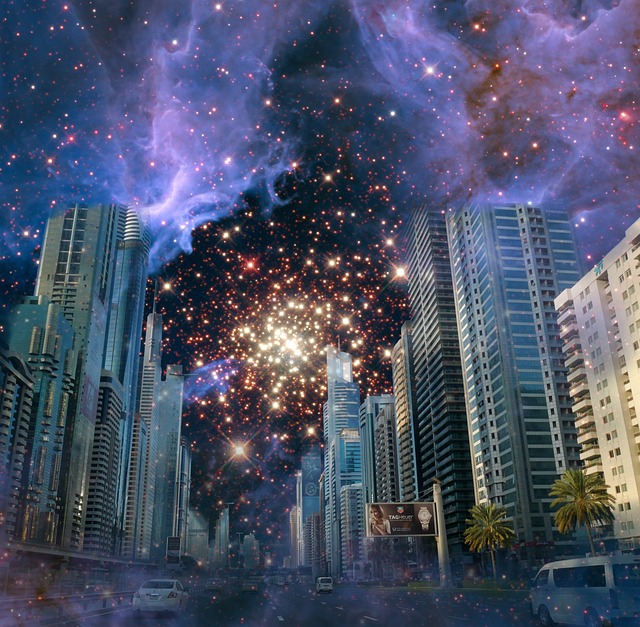


When a viewer steps into a contemporary gallery, the first thing that often captures their attention is the subtle glow that seems to hover in the air. This phenomenon is not a simple light display; it is a carefully engineered holographic installation that merges physics, software, and artistic intent into a single immersive experience. Rather than a static object, the artwork exists as a dynamic interplay of depth, motion, and perception, inviting the observer to move, question, and ultimately become part of the narrative.
Historical Roots of Projection in Fine Arts
The lineage of holographic installations can be traced back to early experiments with light and perspective. In the 18th and 19th centuries, artists like William Henry Fox Talbot and Gustave Le Gray pioneered photographic techniques that played with depth and time, laying a conceptual foundation for what would later evolve into three‑dimensional imaging. The 20th‑century advent of cinema further broadened the scope of visual storytelling, introducing projection as a means to transport audiences beyond the confines of a frame. These developments, coupled with advances in optics, ultimately set the stage for the modern holographic installation.
- Photographic pioneers explored depth perception through double exposures.
- Early cinema experimented with superimposition and motion blur.
- Optical physics research unveiled the principles of interference and diffraction.
Technology Behind the Holographic Installation
At its core, a holographic installation relies on the manipulation of light waves to reconstruct a three‑dimensional image. The process begins with a laser source, which emits a coherent beam that is split into a reference beam and an object beam. The object beam passes through a microscopic pattern or a digital hologram, acquiring the spatial information of the subject. When the reference and object beams intersect, they create an interference pattern that, upon reconstruction, reveals the full 3‑dimensional structure.
Modern installations employ a combination of hardware and software to deliver real‑time interaction. High‑resolution projectors cast holographic imagery onto specially engineered media—often a fine mist of water droplets or a layer of micro‑spheres that act as lenses. Motion‑tracking sensors capture the viewer’s position, adjusting the projected light to maintain correct perspective and depth cues. Software algorithms, running on powerful GPUs, render the holographic scenes with photorealistic lighting and shading, ensuring that the illusion remains convincing even as the audience moves.
- Laser coherence and stability.
- Micro‑droplet or micro‑sphere projection media.
- Real‑time depth‑sensing and motion tracking.
- High‑performance rendering pipelines.
Creative Process: From Concept to Space
Designing a holographic installation begins with a conceptual sketch, often drafted in 3‑D modeling software that allows the artist to experiment with form, color, and interaction. Once the vision is solidified, the project moves into a prototyping phase, where a small-scale model is projected onto a test surface to assess depth, clarity, and viewer perception. Iteration is key; subtle adjustments to lighting angles or the density of the projection medium can dramatically alter the perceived realism.
“The moment a viewer steps into the space, the art stops being a passive object and becomes a dialogue. In a holographic installation, that dialogue is born from light itself,” says Maria Torres, an interdisciplinary artist who has worked extensively with holographic media.
During installation, the environment is treated as an integral component of the artwork. Lighting conditions, acoustics, and spatial layout are all calibrated to enhance the holographic effect. The final step is a live test with volunteers, ensuring that the projected imagery responds accurately to movement and that the illusion remains seamless across a variety of viewing angles.
Cultural Impact and Audience Reception
Holographic installations have shifted the cultural conversation around what constitutes “art” in the 21st century. By blurring the line between physical and virtual, they invite audiences to question the permanence of artistic objects and the nature of perception itself. This shift is especially significant in fine arts circles, where the tactile and material qualities of canvas and sculpture have long been held as sacrosanct.
Audience reception to holographic installations is often characterized by a sense of awe and curiosity. Viewers report that the ability to walk around a floating sculpture or watch an abstract shape morph in real time creates an intimate, almost personal experience that traditional media cannot replicate. Museums and galleries that have incorporated holographic installations have seen increased foot traffic, particularly among younger demographics who are more accustomed to interactive digital environments.
From a cultural standpoint, holographic installations also challenge the hierarchy of artistic mediums. They democratize the creative process by providing a platform where science, engineering, and aesthetics converge. As a result, interdisciplinary collaborations have become more common, fostering a vibrant ecosystem where artists, programmers, and physicists co‑create works that resonate across multiple fields.
Future Horizons: Hybrid Media and Interactivity
The next frontier for holographic installations lies in deeper interactivity and hybridization with other emerging technologies. By integrating artificial intelligence, real‑time data feeds, and responsive environmental controls, future installations can evolve in response to real‑world events, thereby becoming living artworks.
- AI‑Driven Narrative Evolution: Algorithms could alter the holographic story based on audience emotions detected through biometric sensors.
- Environmental Sensing: Incorporating weather data or urban soundscapes to influence the visual content, creating a direct link between the installation and its surroundings.
- Multi‑Device Synchronization: Allowing visitors to capture or interact with the hologram through personal devices, extending the experience beyond the gallery walls.
- Immersive Soundscapes: Coupling spatial audio with the holographic visuals to provide a full sensory immersion, reinforcing the illusion of a truly three‑dimensional presence.
- Community‑Driven Content: Platforms where audiences can submit ideas or designs that are then rendered holographically, fostering a participatory culture in fine arts.
These developments underscore a broader trend: the dissolution of boundaries between art, technology, and society. Holographic installations are not merely novelties; they are gateways to new forms of expression that reflect the complexity and interconnectedness of contemporary life.