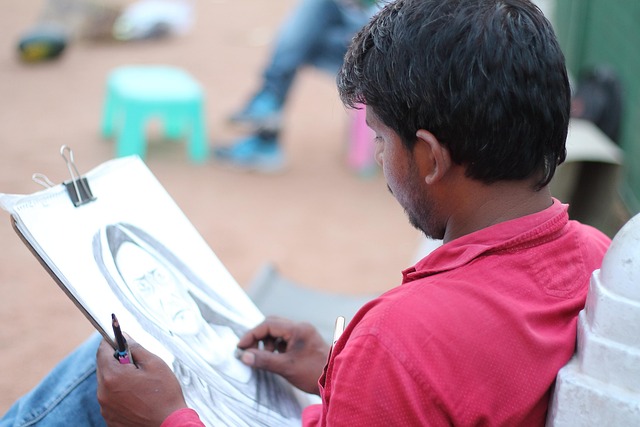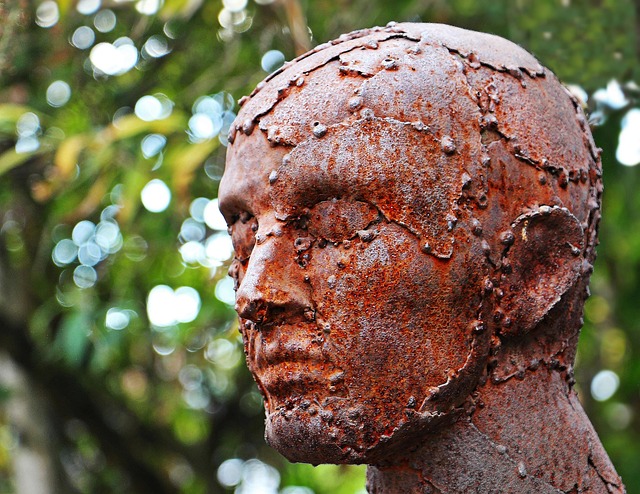


For generations, artists have sought to translate the intricacies of the world onto a flat surface. What many might consider a simple act of sketching has evolved into a discipline that demands precision, patience, and an extraordinary level of detail. This discipline, often referred to as complex drawing, stands as a testament to the human desire to capture nuance. In contemporary culture, the practice of complex drawing serves as both a technical masterclass and a cultural conversation, reflecting society’s shifting values and aesthetics.
Historical Roots of Complex Drawing
From the meticulous anatomical studies of Leonardo da Vinci to the intricate line work of Japanese ukiyo‑e artists, complex drawing has deep historical roots. In the Renaissance, artists used complex drawing to explore light, shadow, and human proportion with unprecedented fidelity. The introduction of perspective and chiaroscuro in the 15th and 16th centuries turned simple sketches into sophisticated studies that guided full‑scale paintings.
- Leonardo’s anatomical notebooks, filled with detailed cross‑sections of the human body.
- The chiaroscuro woodcuts of Albrecht Dürer, demonstrating depth through line variation.
- Japanese master Katsushika Hokusai’s use of fine lines to render mountains and waves.
From Draftsmanship to Artistic Expression
While early practitioners approached complex drawing primarily as a preparatory tool, modern artists treat it as a medium in its own right. The shift from draftsmanship to expressive drawing mirrors broader cultural changes: an emphasis on authenticity, a fascination with the process, and a desire for intimate connections between viewer and work.
“In the line, we find the soul of the subject.” – Anonymous contemporary artist
The Technical Demands of Complex Drawing
Mastering complex drawing requires a blend of manual dexterity, theoretical knowledge, and mental stamina. Artists often spend years honing the subtlety of shading, the rhythm of hatching, and the balance of composition.
- Precision of Tool Use: From ultra‑fine mechanical pencils to traditional charcoal, each medium demands a specific technique to achieve depth and texture.
- Understanding Light: Light behaves differently across surfaces; mastering how to render it convincingly is crucial for realism.
- Psychological Endurance: Maintaining focus over hours of meticulous work tests an artist’s patience and dedication.
Contemporary Practices in Complex Drawing
Today’s complex drawing scene is vibrant and diverse, encompassing everything from hyperrealistic portraits to abstract explorations of form.
- Digital Integration: While traditional media remain popular, many artists now use tablets and styluses to emulate the fine line work of complex drawing while gaining the flexibility of digital editing.
- Cross‑Disciplinary Collaboration: Complex drawing often intersects with performance art, installation, and even scientific illustration, broadening its audience and purpose.
- Public Engagement: Large-scale murals and community sketch sessions invite the public to witness and participate in the meticulous craft of complex drawing.
Audience Interaction and Emotional Resonance
Unlike abstract compositions that may leave viewers perplexed, complex drawing invites an almost conversational engagement. The viewer is drawn into the process: tracing the delicate strokes, noticing how a single line can shift perception.
“The viewer becomes an active witness, following the artist’s breath through each line.” – Curator of Modern Drawing Gallery
Cultural Impact of Complex Drawing
Beyond its aesthetic value, complex drawing has become a cultural touchstone in several ways.
- Educational Value: In schools, detailed drawing exercises foster spatial awareness and fine motor skills.
- Documentary Authenticity: Illustrations of historical events, often rendered with meticulous detail, preserve moments with an immediacy that photography cannot always capture.
- Social Commentary: Artists use complex drawing to critique or highlight social issues, embedding layers of meaning within precise lines.
The Future of Complex Drawing
While the fundamentals of complex drawing remain unchanged, emerging technologies and cultural shifts suggest exciting directions.
- Artificial Intelligence Assistance: AI can suggest line variations or shading patterns, allowing artists to focus on conceptual aspects.
- Virtual Reality Studios: Immersive environments could let artists visualize and manipulate 3D structures before committing to a 2D surface.
- Environmental Consciousness: Eco‑friendly materials—recycled paper, biodegradable pens—are gaining popularity, aligning complex drawing with sustainability.
Conclusion
The practice of complex drawing is a living, breathing entity that bridges the past and future. It is a discipline where meticulous detail meets expressive freedom, where each line becomes a dialogue between artist, subject, and audience. As contemporary culture continues to value authenticity, process, and interdisciplinary collaboration, complex drawing will remain a vital voice, inviting us all to pause, observe, and appreciate the world through the language of fine lines.