
The Living Canvas of Shared Spaces
Walk through any vibrant neighborhood and you may encounter a community mosaic: a wall, a bench, a stairwell shimmering with shards of glass, ceramic, and stone. In the category of Mosaik, these collective artworks stand at the crossroads of Fine Arts, Culture, and everyday life, quietly whispering stories about the people who made them. Unlike a solitary studio masterpiece, a community mosaic harnesses the energy of dozens—sometimes hundreds—of hands. The resulting image is less about perfection and more about the heartbeat of a locale. It is art that can be touched, sat upon, weathered, and revisited, evolving with every passer-by who pauses to trace a line of grout or discover a hidden tessera.
Fine Arts Spilling Beyond Museum Walls
For centuries, mosaics were the domain of opulent churches and regal palaces. Today, the discipline has traveled from marble floors to schoolyards and subway platforms, blurring the boundary between high art and public utility. A community mosaic borrows the compositional rigor of Fine Arts—balanced color palettes, considered negative space, rhythmic patterning—yet transforms these principles into something democratic. Children choose tiles alongside seasoned artisans; retired engineers debate the curve of a vine with avant-garde painters. This meeting of skill levels approaches the essence of artistic collaboration: each participant contributes a fragment that only finds its true power when arranged with the rest, forming an aesthetic symphony greater than any single note.
Cultural Storytelling Embedded in Stone and Glass
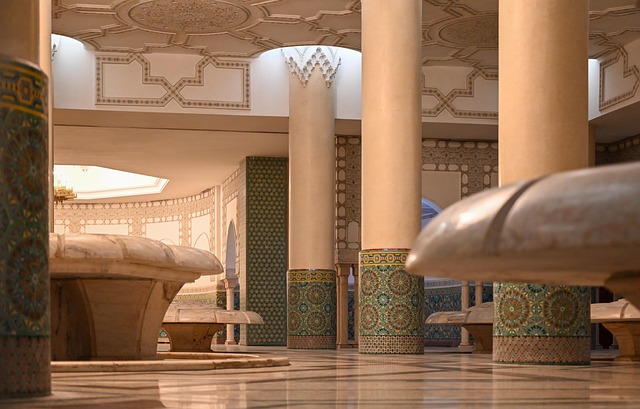
The cultural dimension of a community mosaic is felt in every embedded trinket: a broken tea cup from a family picnic, a pebble pocketed on a migrant’s first day in a new country, or a grandmother’s chipped porcelain brooch. These objects become permanent chapters in a social chronicle, preserved in grout. In neighborhoods undergoing rapid change, mosaics act as tactile archives, keeping memory alive even when storefronts and demographics shift. In immigrant districts, you may notice scripts from multiple alphabets dancing together—Arabic arabesques meeting Latin serif letters, each tile a declaration that culture thrives through confluence rather than competition.
Art as Social Glue
Beyond aesthetic delight, the making of a community mosaic is a ritual of belonging. Workshops often begin with hesitant introductions and end in laughter, paint-splattered jeans, and the shared ache of kneeling for hours over a sketch transferred onto concrete. In that span of time, conversations flow about local legends, personal hardships, and collective hopes. Sociology calls it social capital; artists simply call it process. The mosaic surface becomes a non-verbal agreement that every participant’s perspective matters and will be visibly enshrined for years, perhaps decades.
Techniques: From Ancient Roman Opus to Contemporary Adhesives
Mosaic tradition stretches back to Mesopotamian temples, Roman villas, and Byzantine basilicas. Yet through modern materials—latex-modified thinset, recycled mirror, smalti smoothed by tumbler machines—contemporary practitioners expand the medium’s expressive vocabulary. Glass shards catch city lights, sending prismatic reflections that change with the hour. Reclaimed roof tiles introduce warm terracotta notes, echoing sustainable values. Even digital design tools now assist in scaling community-generated sketches onto curved architecture, ensuring each volunteer tile-setter has a clear roadmap without stifling spontaneity.
Enduring Impact on Urban Identity
Cities that nurture the Mosaik ethos often witness intangible dividends. Vandalism rates around a mural or mosaic tend to drop; public pride rises. Tourists stop to photograph a colorful underpass that, months prior, felt menacing. Local schools incorporate the site into art curricula, prompting the next generation to see their environment as a canvas rather than a fixed backdrop. Economic uplift can follow too: cafés sprout near celebrated mosaics, cultural festivals springboard from the imagery, and residents feel empowered to initiate further beautification projects.
Perpetual Evolution
A mosaic ages like a living organism. UV light fades certain pigments, rainwater deepens others; frost may loosen a tile, inviting a future restoration day that rekindles communal spirit. New mosaic projects sprout nearby, riffing on color schemes or thematic motifs. Through that continuum, the community mosaic remains a visual manifesto: Art is not an isolated spectacle bestowed by elites but a participatory adventure, forever unfinished, forever open to the next curious hand wielding a fragment of glass ready to slot into place.