
The Pulse of Patterns Across Eras
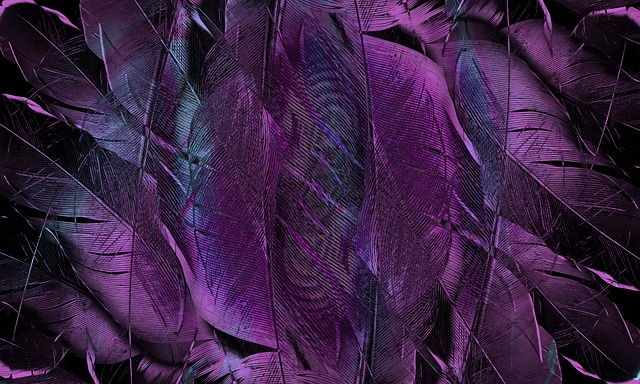
Stand in front of a Persian carpet, a Klimt canvas, or a street mural in Mexico City and you will feel it: the hum of a decorative pattern echoing through time. In the realm of Fine Arts, patterns do more than simply adorn; they transmit emotion, memory, and identity. Each swirl or tessellation is the living heartbeat of a culture, carried forward by artisans who translate collective stories into visible form. By following the rhythm of repeating motifs, we intuitively sense the age of a civilization, its trade routes, and even its aspirations.
Culture Woven into Lines and Motifs
Every culture cultivates its own visual idioms, and nothing captures that diversity quite like the patterned surface. Celtic knotwork whispers of endless cycles, African kente cloth proclaims social status through color geometry, while Japanese kimono prints marry seasonal symbolism with graceful minimalism. These accumulated graphic vocabularies make the simple act of observing feel like traveling without moving. When Fine Arts adopt such motifs—think of Matisse’s Moroccan explorations—our appreciation of decoration shifts from mere embellishment to an unfolding cultural dialogue.
Fine Arts as a Living Archive
Museums often separate decorative arts from painting and sculpture, yet artists consistently blur these distinctions. Renaissance painters borrowed Islamic arabesques; Art Nouveau sculptors let organic patterns crawl across wrought iron. The gallery thus becomes an archive where each decorative pattern records crossings of borders, marriages of techniques, and collisions of faith. Studying these repetitions alongside brushstrokes and chisel marks reveals that decoration is not an afterthought—it is a fundamental language of Art through which periods speak to one another.
Graphic Sensibilities in Contemporary Studios
Today’s digital designers continue the lineage, translating centuries-old ornament into vector paths and pixel grids. In the Graphics category, pattern libraries evolve faster than ever, yet their roots remain ancient. A tattoo artist references Polynesian tapa, an indie game’s interface channels Bauhaus grids, and a fashion illustrator overlays fractal symmetry on virtual runways. The hybridity enabled by software does not dilute authenticity; rather, it invites creators to participate in a global remix where every new decorative pattern can spark cross-cultural empathy.
Feeling the Rhythm of Ornament
Why do our eyes linger on repetition? Perhaps because, at a primal level, rhythmic visuals mirror heartbeat and breath. When we trace the loops of a Byzantine mosaic or the mirrored waves of Op Art, we enter a tactile conversation between mind and material. In that moment, Fine Arts, Culture, and personal sensation converge. We are no longer passive viewers; we are participants, reading our own experiences into every curl and diamond. The next time a pattern captivates you, notice how its cadence aligns with your mood—calming, energizing, or nostalgic—and recognize the timeless cultural lineage that makes such intimate resonance possible.