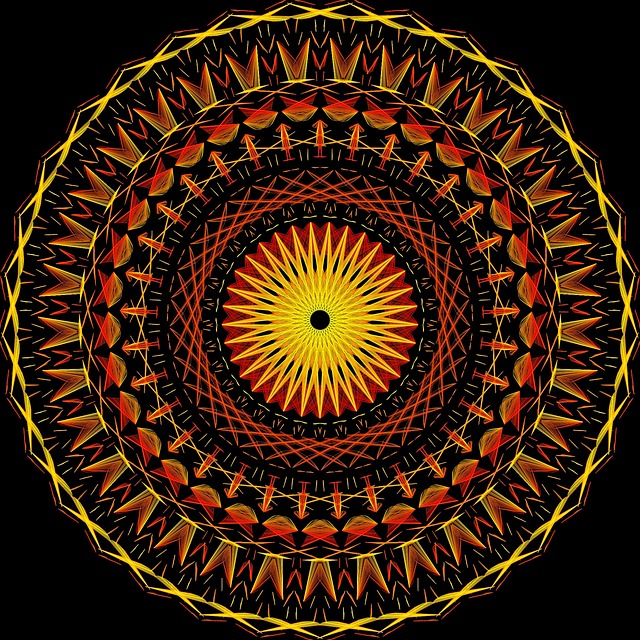

The word mandala, derived from Sanskrit meaning “circle,” has long been a symbol of unity and wholeness in many cultures around the world. From the intricate geometric designs carved into ancient Buddhist stupas to the vivid, hand‑painted panels found in African tribal communities, the mandala serves as a visual language that transcends borders. By inviting observers to focus on a central point that expands outward in symmetrical patterns, these artworks offer a universal meditation on balance, harmony, and the interconnectedness of life.
The Historical Roots of Mandala in Fine Arts
While the term “mandala” is most closely associated with Eastern traditions, its manifestations appear across a spectrum of artistic practices worldwide. In ancient India, the mandala was a cosmological diagram that represented the microcosm of the universe. Monastic artists used these diagrams to guide meditation, often incorporating elaborate motifs such as lotus petals, sunbursts, and concentric circles. The art of Tibetan thangka painters, for example, evolved complex mandalas that are still used in contemporary spiritual retreats.
Beyond South Asia, mandala‑inspired motifs are visible in the decorative arts of Southeast Asia, where Buddhist temples in Thailand and Cambodia feature mandala‑shaped murals and latticework. In Central Asia, nomadic peoples produced mandala‑like patterns in their textiles, weaving symbolic stars and spirals into blankets that served both ceremonial and practical purposes.
- Indian sand mandalas created by monks as a form of artistic pilgrimage.
- Tibetan thangka paintings that incorporate mandala layouts to depict Buddhist cosmology.
- Thai temple murals that use mandala geometry to illustrate spiritual narratives.
Mandala in Contemporary Global Design
Today, the mandala’s influence extends beyond religious and ceremonial contexts. Designers, architects, and contemporary artists employ mandala structures to explore themes of cultural identity, social cohesion, and environmental stewardship. The repetitive, symmetrical patterns inspire modern graphic design, interior décor, and even technology interfaces, demonstrating the versatility of the mandala as a creative catalyst.
“The mandala is a universal symbol that brings people together,” says art historian Dr. Aisha Khan. “Its geometry offers a shared visual vocabulary that transcends linguistic and cultural differences.”
Mandala as a Tool for Cultural Dialogue
When communities collaborate on mandala projects, they often engage in storytelling that reflects their collective histories and aspirations. By sharing a common framework, participants can weave diverse narratives into a single, cohesive piece. Such collaborative efforts are increasingly common in educational settings, where students from different cultural backgrounds create mandala murals to celebrate multiculturalism.
Through this process, individuals learn to honor differences while recognizing shared patterns. The mandala becomes a living record of dialogue, where each color, line, and shape represents a voice that contributes to a larger chorus.
Case Study: A Mandala Festival in Nairobi
In Nairobi, Kenya, the annual “Circle of Life” festival showcases a vast mandala painted on a communal courtyard. Artists from various ethnic groups—Luo, Kikuyu, Somali, and others—contribute motifs that reflect their cultural symbols, such as the Luo’s symbolic fish, the Kikuyu’s corn motif, and the Somali’s star pattern. The finished artwork is a testament to the city’s rich diversity, and the festival draws visitors from across the continent to experience the unity of color and shape.
- Artists gather to discuss shared themes such as community, resilience, and hope.
- Each group paints a segment of the mandala, ensuring proportional representation.
- Local schools host workshops where children learn about the meaning behind each motif.
Techniques and Materials: From Traditional to Digital
Traditional mandala creation relies on a handful of basic tools: a compass for drawing circles, a straightedge for aligning lines, and pigments sourced from natural materials such as crushed minerals and plant extracts. In contrast, digital mandalas employ vector software, allowing artists to experiment with infinite layers and color palettes. Both approaches share a foundational reliance on symmetry, balance, and repetition, underscoring the mandala’s adaptability across mediums.
Regardless of the medium, the act of creating a mandala often induces a meditative state in the artist. The repetitive motion of tracing patterns, the careful selection of color, and the focus on a central point all contribute to a heightened sense of presence.
Environmental Impact and Sustainable Mandalas
Many contemporary mandala artists are incorporating sustainability into their practice. By using recycled paper, natural dyes, and low‑impact inks, they reduce their ecological footprint while preserving the visual integrity of their work. Some artists even transform discarded textiles into mandala tapestries, turning waste into art that celebrates cultural diversity and ecological responsibility.
- Artists use reclaimed canvas to create large, community‑based mandalas.
- Natural dyes from beetroot, turmeric, and indigo provide vibrant, long‑lasting colors.
- Digital mandalas can be printed on biodegradable paper, minimizing waste.
Mandala in Therapy and Wellness
Beyond aesthetics, mandalas serve therapeutic purposes. Color therapy, often referred to as chromotherapy, leverages the psychological impact of colors to alleviate stress and promote emotional balance. When integrated with mandala designs, color therapy can amplify the healing experience, as the concentric patterns encourage viewers to focus inwardly and find calm amidst external noise.
Therapists around the world employ mandala coloring books for children and adults alike. By engaging with mandala patterns, individuals develop fine motor skills, attention to detail, and an appreciation for symmetry—skills that transcend cultural boundaries.
Mindfulness Workshops in Urban Centers
Cities such as New York, London, and Mumbai host regular mindfulness workshops where participants paint mandalas under guided instruction. These sessions emphasize the connection between breath, intention, and artistic expression. Attendees report increased awareness of their surroundings and a deeper appreciation for the collective artistry that surrounds them.
- Participants begin with a breathing exercise to center themselves.
- They sketch a basic mandala layout on paper or canvas.
- Colors are chosen based on personal meaning or guided by a facilitator’s prompts.
The Future of Mandala Art in a Globalized World
As cultural exchange accelerates in the 21st century, the mandala continues to evolve, absorbing new motifs while retaining its core principles of symmetry and unity. Emerging artists blend traditional mandala patterns with contemporary motifs—such as urban street art, digital glitch aesthetics, and indigenous textile designs—creating hybrid forms that reflect the complexities of modern identity.
Education systems increasingly recognize the pedagogical value of mandala projects. By integrating mandala creation into art curricula, teachers nurture creativity, cultural awareness, and collaborative skills among students from diverse backgrounds.
Interactive Digital Mandalas for Global Communities
Online platforms are now hosting collaborative mandala projects that bring together participants from every continent. Users can contribute digital brushstrokes, suggest color palettes, and share stories behind their chosen motifs. These virtual mandalas serve as living archives of cultural exchange, demonstrating how a simple geometric shape can bridge distances.
- Open‑source mandala generators allow artists to experiment with new designs.
- Social media hashtags like #MandalaUnity enable global visibility and discussion.
- Virtual reality exhibits let viewers immerse themselves in expansive mandala landscapes.
Conclusion: A Living Celebration of Diversity
From ancient monasteries to modern community centers, mandala art persists as a powerful testament to human creativity and the desire for harmony. Its symmetrical forms invite participation, its colors narrate shared histories, and its geometry fosters a sense of belonging that transcends cultural divides. Whether painted with earth pigments or rendered on a screen, the mandala remains a vibrant, evolving canvas that continues to celebrate cultural diversity through colorful patterns.